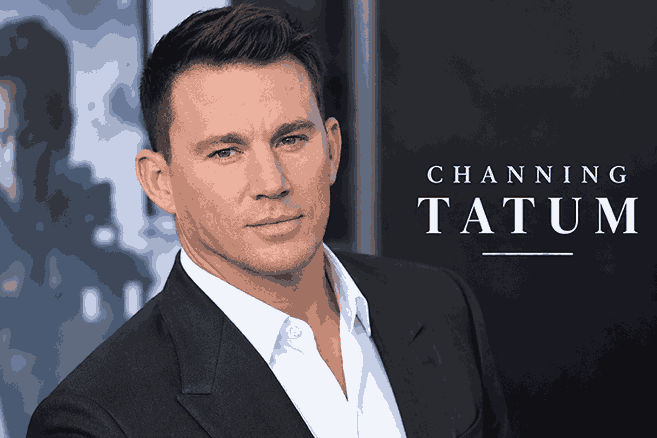
Picture a lanky kid from rural Alabama flipping burgers and stripping at a Tampa nightclub just to pay rent. Now picture that same guy producing blockbuster films, commanding $20 million paychecks, and dating one of the biggest pop stars on the planet. That’s the real story of Channing Tatum, and it’s way more interesting than the glossy magazine covers let on.
If you’ve been scrolling through headlines lately, you already know Channing Tatum is everywhere right now. Between his recent box office wins, his very public romance with Zoe Kravitz, and his expanding production empire, the man is having a massive cultural moment in 2025. Fans want to know everything — how much money he’s actually made, where he came from, and what’s next. So let’s break it all down, piece by piece.
From Cullman, Alabama to the Bright Lights: The Early Years
Channing Tatum grew up in Cullman, a small town in northern Alabama where the biggest Friday night event was a high school football game. His family wasn’t wealthy. His mother was employed by an airline, and his father was in the construction industry. . Money was tight, and young Channing dealt with ADHD and dyslexia throughout school, which made the classroom a constant struggle. He’s been open about how those learning differences made him feel like an outsider for most of his childhood.
Sports became his escape. He played football, ran track, and practiced martial arts with serious dedication. His athletic ability was strong enough to earn him a football scholarship to Glenville State College in West Virginia. But here’s the twist — he never actually attended classes there. He turned down the scholarship and moved to Florida instead, chasing something he couldn’t quite name yet.
In Tampa, Channing Tatum worked a string of odd jobs that read like a screenplay. He was a construction worker, a mortgage broker’s assistant, a waiter, and yes, a male stripper at a club called Mr. Ricky’s. He performed under the stage name “Chan Crawford.” That stripping chapter would later become the raw material for the most profitable franchise of his entire career, but at the time, it was just survival. He was a 20-something trying to figure out his life, one eight-dollar lap dance at a time.
Table of Contents
The Modeling Detour and the Move to Acting
Before Channing Tatum ever stood in front of a movie camera, he stood in front of a fashion photographer’s lens. He began booking ads for Abercrombie & Fitch, Dolce & Gabbana, and Nautica within months of a talent scout spotting him at a Miami nightclub in the early 2000s. . He appeared in music videos too, most notably in Ricky Martin’s “She Bangs” and a Twista clip that got heavy MTV rotation.
Modeling paid the bills, but it didn’t light a fire in him. He wanted to act. He started taking small roles in television shows like CSI: Miami and CSI: NY, playing the kind of forgettable guest characters that every young actor cycles through. Then came Coach Carter in 2005, where he played a high school basketball player alongside Samuel L. Jackson. It was a supporting role, but it put him on Hollywood’s radar in a real way.
Everything changed in 2006. Channing Tatum landed the lead role in Step Up, a low-budget dance romance that nobody at the studio expected to do much. The movie cost about $12 million to make and pulled in over $115 million worldwide. Audiences connected with his raw, unpolished charm and his very real dance ability. Overnight, he went from “that guy from the music videos” to a legitimate leading man.
The Magic Mike Empire and Production Power Moves
The most defining chapter in the Channing Tatum career story started with a conversation in a bar. He told his producing partner Reid Carolin about his days stripping in Tampa, and Carolin immediately said, “That’s a movie.” Most actors would have laughed that off. Channing Tatum leaned in.
Magic Mike hit theaters in 2012, directed by Steven Soderbergh and starring Tatum alongside Matthew McConaughey and Joe Manganiello. The film was made on a shoestring budget of roughly $7 million and grossed over $167 million globally. It was a cultural phenomenon. The sequel, Magic Mike XXL (2015), cemented the franchise as a pop culture staple, and Magic Mike’s Last Dance (2023) brought the trilogy to a close with Tatum commanding his biggest paycheck to date.
But the real genius move was what happened behind the camera. Channing Tatum co-founded Free Association, a production company that gave him creative control over his projects. Instead of waiting for studios to hand him scripts, he started developing his own. He produced the 21 Jump Street reboot series, the Dog film he also co-directed, and several documentary projects. This shift from actor-for-hire to actor-producer-director is the single biggest reason his net worth has climbed so steadily over the past decade.
Channing Tatum Net Worth Breakdown: Where the $80 Million Comes From
Let’s talk numbers, because this is what most people clicked to find out. As of 2025, Channing Tatum‘s net worth is estimated at approximately $80 million. That figure comes from multiple revenue streams, not just acting paychecks.
His film salaries alone account for a huge chunk. At his peak, he was earning between $15 million and $20 million per major studio film. The 21 Jump Street movies, the Magic Mike trilogy, The Lost City with Sandra Bullock, and Deadpool & Wolverine (2024) all came with hefty upfront fees plus backend profit participation.
Then there’s the producing income. Free Association has a first-look deal with a major studio, which means Tatum gets paid to develop projects even before they go into production. When those projects actually get made, he earns producer fees and a percentage of the profits. The Magic Mike live stage show in Las Vegas, which he also produced, reportedly generates millions annually.
Brand endorsements add another layer. His long-running partnership with 1800 Tequila and his own vodka brand, Born and Bred, bring in consistent revenue. He’s also done high-profile fragrance campaigns for Dolce & Gabbana that reportedly paid seven figures each.
Real estate rounds out the portfolio. Channing Tatum has owned and flipped several properties in Los Angeles, including a stunning modern home in the Hollywood Hills that he sold for a significant profit in recent years.
Career Earnings Comparison by Era
| Career Phase | Years | Estimated Annual Earnings | Key Projects |
| Early Hustle | 2000–2005 | 50K–150K | Modeling gigs, TV guest spots, Coach Carter |
| Breakout Star | 2006–2011 | 2M–6M | Step Up series, G.I. Joe, Public Enemies |
| A-List Peak | 2012–2018 | 15M–22M | Magic Mike trilogy, 21/22 Jump Street, The Hateful Eight |
| Producer Era | 2019–2025 | 10M–18M | Dog, The Lost City, Deadpool & Wolverine, Free Association deals |
Personal Life: Love, Fatherhood, and Going Public
Channing Tatum met actress Jenna Dewan on the set of Step Up in 2006, and their whirlwind romance became one of Hollywood’s favorite love stories. They married in 2009 and welcomed their daughter Everly in 2013. For years, they were the couple everyone pointed to as proof that Hollywood marriages could actually work.
Then, in 2018, they announced their separation. The split was amicable by celebrity standards, and both have spoken publicly about co-parenting Everly with genuine warmth and respect. Their divorce was finalized in 2019.
In 2021, Channing Tatum started dating actress and director Zoe Kravitz, whom he met while collaborating on her directorial debut Blink Twice. Their relationship has been one of the most talked-about celebrity pairings of the decade. The two have been spotted at red carpet events, award shows, and quiet dinners in New York and Los Angeles, and fans are deeply invested in their dynamic. As of early 2025, the couple remains together and appears stronger than ever.
Tatum is also a devoted father. He’s written a bestselling children’s book series called The One and Only Sparkella, inspired by his daughter Everly. The books hit the New York Times bestseller list and showed a softer, more vulnerable side of a guy most people still associate with shirtless dance routines.
What Fans and Industry Insiders Are Saying Right Now
The conversation around Channing Tatum in 2025 is noticeably different from the conversation five or ten years ago. Back then, the industry dismissed him as a pretty face with good dance moves. Now, he’s respected as a smart businessman and a genuinely talented comedic actor.
His performance in Deadpool & Wolverine earned surprise praise from critics who didn’t expect much from his brief but memorable cameo. Fans flooded social media demanding a solo Gambit spinoff, and the hashtag #GiveChanningGambit trended for days on X.
Industry analysts point to his production work as the real story. Free Association has several projects in development, including a major streaming deal that insiders say could push his net well past the $100 million mark within the next two years. He’s no longer just riding the wave of his own fame — he’s building infrastructure that will generate money long after he stops taking acting roles.
The Road Ahead
Channing Tatum has spent the last twenty years proving people wrong. The kid with dyslexia from Cullman, Alabama wasn’t supposed to become one of Hollywood’s most bankable stars. The male stripper from Tampa wasn’t supposed to build a production company with a major studio deal. The action-comedy actor wasn’t supposed to direct a critically praised road-trip movie about a military dog. And yet, here he is.
At 45, he’s in a rare position where he can pick and choose his projects, develop stories he actually cares about, and spend more time with his daughter and his partner. The money is secure. The legacy is growing. And if the Gambit spinoff rumors turn into reality, we might be looking at a whole new chapter that could reshape his career all over again.
So what do you think is the most surprising part of the Channing Tatum story — the stripping origin, the producing empire, or the fact that he wrote a bestselling kids’ book? Drop your take in the comments below, because honestly, this guy’s life reads like a movie that Hollywood would reject for being too unrealistic.