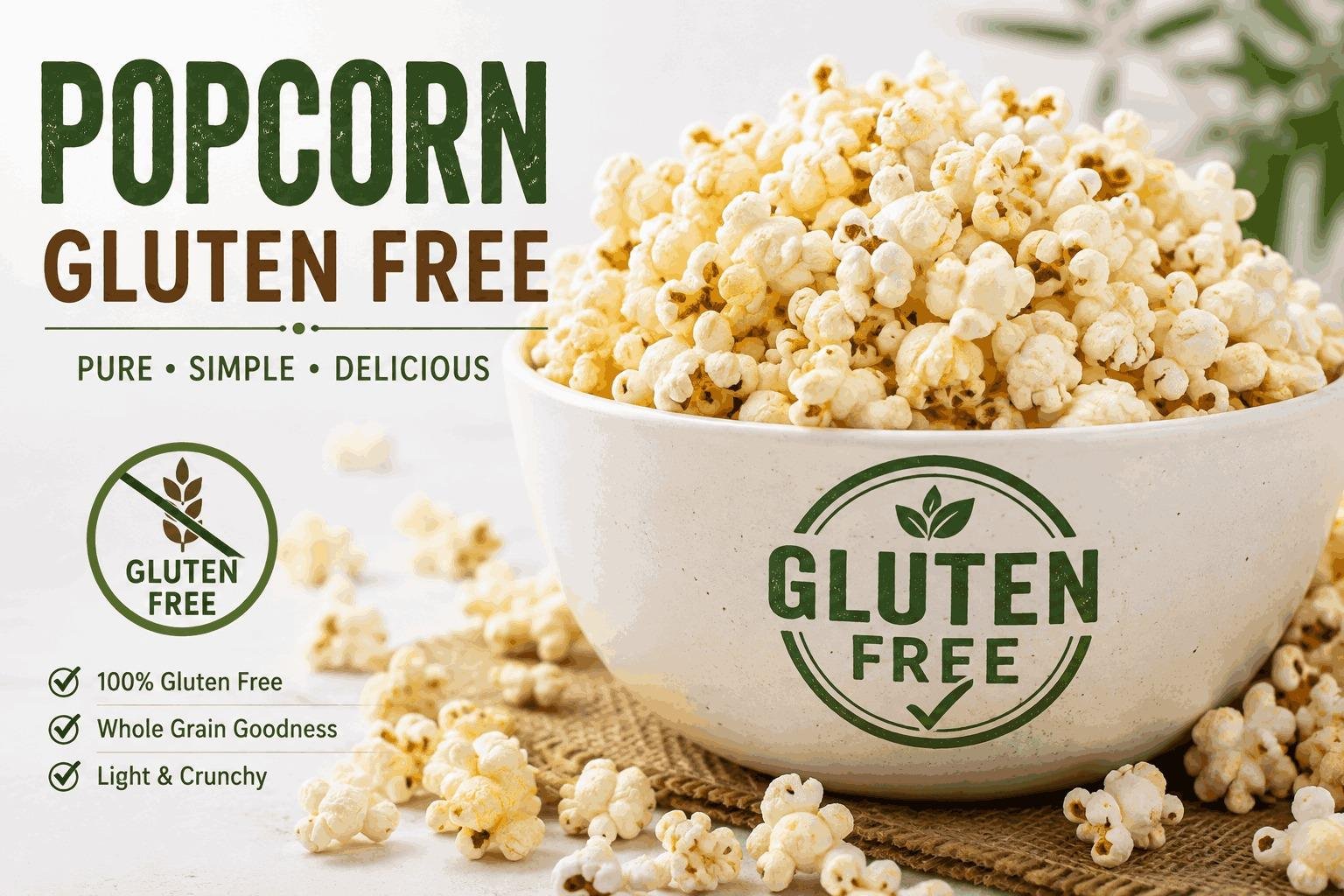
You grab a bag of kernels, ready for movie night, when the nagging question hits: is popcorn gluten free? That moment of hesitation is real. I’ve worked with countless celiac patients and nutrition clients who stop eating their favorite foods out of pure anxiety. The core truth is this: pure corn is a grain, but not a gluten-containing one. The danger doesn’t live in the kernel; it hides in the preparation and packaging. This guide cuts through the noise to get you back to safe snacking tonight.
Understanding the Basics: Why Plain Corn Kernels Are Safe
Let’s strip this down to the science. Gluten is a family of proteins found specifically in wheat, barley, rye, and triticale. Corn, scientifically known as Zea mays, belongs to an entirely different botanical family. It’s a grass that produces a storage protein called “zein.” Unlike the gliadin protein in wheat, zein does not trigger an immune response in people with celiac disease or non-celiac gluten sensitivity. A study published in the Journal of Agricultural and Food Chemistry has long confirmed that the molecular structure of corn prolamins is safe for celiac patients. If you pick a cob from a field and pop it in a clean, dedicated air popper, you are eating a naturally gluten free whole grain.
The Hidden Danger: Why Bagged Popcorn Often Fails
I always tell my readers to take a deep breath before buying standard microwave popcorn. The problem isn’t the corn; it’s the flavoring dust. To make that artificial butter flavor, manufacturers often use maltodextrin or natural flavoring agents. While maltodextrin derived from corn is safe, it can also be sourced from wheat. More critically, “natural butter flavor” frequently contains barley malt extract, a potent gluten source. Beyond the ingredients, the factory environment is a war zone. When popcorn is processed on shared lines that handle pretzels or other wheat-based snacks, airborne flour settles everywhere. That fine dust floats into the vents and lands directly on your popcorn, creating a serious cross-contamination risk that is invisible to the naked eye.
How to Analyze a Popcorn Label Like a Pro
You need to turn into a label detective. Don’t just look for the words “wheat” or “barley.” Look for the specific phrase “Certified Gluten Free.” When you see this seal from organizations like the GFCO, it means the product has been tested to contain fewer than 10 parts per million (ppm) of gluten—a stricter standard than the FDA’s legal limit of 20 ppm. If a label says “gluten free” but lacks a certification stamp, it’s still legally required to be under 20 ppm, which is safe for the vast majority of celiacs. However, you must scan the allergen statement. If you see “produced on equipment that also processes wheat,” trust the manufacturer’s honesty and put the bag back. That warning is a voluntary admission of a risky production environment.
Cross-Contamination at the Movie Theater
Movie theater popcorn is arguably the highest-risk scenario in public snacking. You might assume the danger is in the “golden flavoring” oil, which is often simply artificial coloring and coconut oil, but the real threat is the popping equipment. Most theaters use a central popping machine and a shared dusting station where cheese-flavored powders (which routinely contain wheat-based anti-caking agents) are applied. The scoop that was just in the cheese powder slides right back into the main butter-only bin. Furthermore, I’ve observed that theater staff rarely change gloves between handling pretzel bites or pizza and scooping popcorn. Unless the theater has a dedicated allergy protocol and separately packaged options, I strongly advise bringing your own safe snack from home.
Table: Popcorn Safety at a Glance
| Type of Popcorn | Gluten Status | Risk Factor | Recommendation |
| Plain, Air-Popped Kernels | Naturally Gluten Free | Virtually None (if popped at home) | Safest choice. Use a dedicated clean popper. |
| Microwave (Butter Flavor) | Watch Out | Barley malt extract, wheat-derived flavors | Avoid unless explicitly labeled “Certified Gluten Free.” |
| Pre-Popped “Smart” Bags | Mixed | Seasoning blends, shared production lines | Verify the back panel for a GF seal every time. |
| Movie Theater (Butter Only) | High Risk | Shared scoops, airborne cheese powder, gloves | Proceed with extreme caution. Ask to see the butter oil container. |
| Flavored Gourmet (Caramel/Cheese) | Danger Zone | Malt syrup in caramel; wheat starch in cheese dust | Almost never safe unless from a dedicated GF facility. |
Top Certified Gluten Free Popcorn Brands You Can Trust
- SkinnyPop (Original): Their classic sea salt and original varieties are Certified Gluten Free, manufactured in a dedicated peanut and tree nut-free facility, but always check their specifically labeled GF bags.
- Jolly Time Simply Popped: This line uses simple ingredients and avoids the malt flavoring trap, carrying a clear gluten-free label.
- Boomchickapop: The sea salt and light kettle corn flavors are typically safe and marked, but you must stay away from their specialty flavors that might not bear the seal.
- LesserEvil: A top-tier choice in the health aisle. They use organic, non-GMO corn and very minimal ingredients like coconut oil and Himalayan salt. Their cleaning protocols for allergen control are industry-leading.
- Black Jewell: A true gem for the sensitive snacker. They sell “No-Salt, No-Oil Microwave Popcorn” that is simply kernels in a bag. It’s a pure, minimalist option that skips the toxic non-stick chemicals often found in the bag linings of other brands.
The “Hulless” Myth and Digestibility
There is a persistent rumor that “hulless” popcorn is better for your digestive system and somehow “safer.” Let’s clarify this. There is no such thing as a truly hull-less popcorn kernel. If a kernel had no hull, there would be no sealed chamber to trap steam and create the explosive pressure needed to pop. What brands market as “hulless” are actually varieties of smaller, tender kernels that shatter into tiny pieces upon popping. The sharp, tooth-breaking shards are just smaller. For celiacs who already suffer from inflamed, damaged intestinal villi, these tiny, jagged pieces of insoluble fiber can be incredibly irritating, mimicking a glutening reaction. If you feel “glutened” after eating clean popcorn, you are likely reacting to the mechanical irritation of fiber scraping against an inflamed gut wall.
Strategic Topping Guide for a Safe Party
When hosting a gathering where you know a friend has celiac disease, design a “safety zone.” Set out a single bowl of plain popcorn before any seasoning starts. For the toppings table, force a logical, linear flow to prevent dipping and contamination. Provide drizzling stations with olive oil, melted coconut oil, or clean dairy butter. For dry shakes, lay out small pinch bowls of pink Himalayan salt, cinnamon, or nutritional yeast (a vegan favorite that tastes surprisingly cheesy). Label everything. Place the salty, gluten-heavy snacks like pretzel sticks and crackers on a completely separate table across the room. This physical distance prevents the “double-dip” tragedy where a guest grabs a pretzel and then plunges the same hand into the popcorn bowl.
Why Your Air Popper Needs a Deep Clean
If you buy a second-hand air popper or dig one out of your garage, you must assume it’s a hazard. Old popcorn poppers are notorious for accumulating a greasy, sticky film inside the chute. That resin traps old flavoring powders, potentially including wheat starch from a previous owner’s experimental batches. I recommend running a “sacrificial batch” of cheap kernels through a newly acquired machine and throwing that popped corn directly into the trash. Then, unplug the unit and meticulously swab the popping chamber and chute with a cotton swab dipped in white vinegar. This cuts through the oil-soluble allergens and degrades the gluten protein residue.
Nutritional Punch: Popcorn as a Functional Food
Stop viewing popcorn as a junk food vessel; start treating it as a powerful, shelf-stable prebiotic. Whole grain popcorn is packed with polyphenols, specifically ferulic acid, which act as antioxidants. The University of Scranton discovered that popcorn hulls contain a surprisingly high concentration of these disease-fighting compounds—rivalling levels found in nuts. For gluten free diets, which often lack fiber because rice flour is so refined, popcorn fills a critical nutritional gap. Eating three cups of air-popped popcorn provides about 4 grams of insoluble fiber. That bulk keeps your digestion moving and feeds your gut’s good bacteria. It is, in essence, a nutrient-dense vehicle for your healthy fats, assuming you top it with avocado oil rather than hydrogenated shelf-stable margarine.
What to Do If You Accidentally Eat Contaminated Popcorn
You’ve taken a bite of a flavored popcorn, and the taste of malt is unmistakable. Stop eating immediately. Do not try to “fix it” by drinking alcohol or taking digestive enzymes marketed for gluten breakdown; these products, like GlutenEase, do not work on the celiac-level toxicity of the gliadin protein. They might help with minor bloating from lactose or fructans, but they won’t stop an autoimmune cascade. Your immediate action plan is hydration and rest. Drink plenty of water with an electrolyte tablet to keep your mineral balance stable. Activated charcoal can help bind the irritants in your stomach if taken quickly, but it also absorbs your medication, so use this with medical caution. If symptoms become severe or involve anaphylaxis, seek emergency help immediately.
Frequently Asked Questions: “Is Popcorn Gluten Free” Deep Dive
Q: Is microwave popcorn gluten free if it’s just “plain”?
A: Not always. Plain kernels are safe, but the “non-stick” lining of many microwave bags can contain wheat-based release agents. You must look for a specific “gluten free” print on the box. Some generic store brands skip the flavor dust but pack the bags in a flour-heavy facility, risking airborne contamination.
Q: Can I eat popcorn at a bar or pub that serves beer?
A: I recommend avoiding it. Pub popcorn is frequently a cheap, bulk-purchased commodity seasoned with a “cajun” or “barbecue” rub containing wheat starch as a flow agent to stop clumping. Furthermore, in a bar environment, the hands reaching into that communal bowl are regularly holding pints of wheat-heavy beer, instantly cross-contacting the kernels.
Q: What makes Orville Redenbacher’s popcorn safe or unsafe?
A: You must read the specific flavor profile. Orville’s “Naturals Simply Salted” carries a gluten free label because it contains only non-GMO corn, palm oil, and salt. However, their classic “Movie Theater Butter” and “Pour Over Cheddar” lines are unsafe because they use barley malt extract and wheat flour in the seasoning packet, respectively.
Q: Is colored popcorn (like red or blue kernels) any different regarding gluten?
A: No, the heirloom genetic strains that produce red, blue, or purple hulls are purely an aesthetic and antioxidant shift. The anthocyanins that create the color do not introduce gluten proteins. Treat red popcorn exactly like white or yellow—it is naturally safe, but watch the preparation additives.
**Q: Why do I feel bloated even when eating gluten free popcorn with butter?
A: The butter may be the hidden culprit. Bulk butter flavoring oils in restaurants often contain soybean oil combined with “butter esters.” Additionally, popcorn is a high FODMAP food due to its polyol and fiber content. If your celiac damage is recently healed, you might have developed a secondary sensitivity to the fructans in the corn itself or the lactose in pure milk butter. Try ghee instead.
**Q: Are popcorn seasoning shakers from the grocery store safe?
A: Most are a gamble. White cheddar and ranch seasoning shakers almost universally use whey powder, but the anti-caking agent to keep the powder free-flowing is often wheat starch. You need to find shakers explicitly labeled “gluten free.” Better yet, blend your own mix at home using powdered sea salt, dried dill, and granulated garlic to guarantee a zero-gluten, high-flavor finish.
Conclusion
Knowing the answer to “is popcorn gluten free” transforms your diet from a restricted list of “no” into a world of “yes.” You no longer have to sit there with an empty lap while the credits roll. You can own the snack table. Start simple. Grab a bag of Black Jewell kernels, pop them in a clean stainless steel pot on your stove with a splash of avocado oil, and taste the nutty crunch that nature intended. Trust the simplicity of a whole grain that predates processed agriculture.
Don’t just read about safe eating—live it. Take your phone, order a dedicated strainer bowl for your next batch, and physically remove any “flavor-blasted” boxes from your