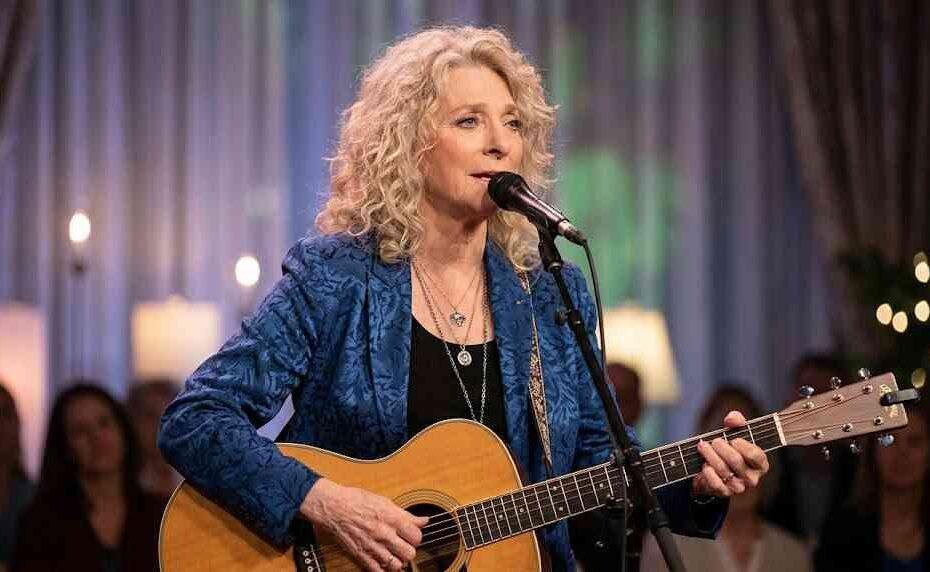
Picture a dimly lit Greenwich Village coffeehouse in the early 1960s, where a young woman with crystal-clear soprano vocals commands a room full of restless bohemians into dead silence. That woman was Judy Collins, and her voice would go on to define an entire generation of American folk music.
Right now, Judy Collins is trending across social media and music forums as fans celebrate her astonishing longevity in an industry that chews up artists and spits them out within a single album cycle. At 85 years old, she is still touring, still recording, and still drawing sold-out crowds — a feat almost nobody in popular music can match. People want to know everything about her journey, her finances, and the personal battles she fought behind the curtain. This article covers all of it.
Who Is Judy Collins? Early Life and Musical Beginnings
On May 1, 1939, Judy Collins was born in Seattle, Washington. . Her father, Charles Collins, was a well-known radio disc jockey and singer who exposed his daughter to music from the moment she could walk. By age four, she was already sitting at the piano, picking out melodies by ear. The family later relocated to Denver, Colorado, where the wide-open mountain landscape would quietly seep into the emotional texture of her later songwriting.
Classical training came first. Judy Collins studied under the renowned conductor Antonia Brico, and for a brief window during her teenage years, she genuinely believed her future lay in performing Mozart and Chopin on concert stages. She was talented enough that Brico personally encouraged her to pursue the conservatory route. But the folk music explosion of the late 1950s changed everything.
When she heard Woody Guthrie and Pete Seeger for the first time, something clicked. The raw storytelling, the political urgency, the simplicity of an acoustic guitar carrying an entire message — it pulled her away from the concert hall and straight into the smoky folk clubs of Denver and Boulder. By the time she turned 21, Judy Collins had dropped the classical path almost entirely and was performing traditional folk songs in coffeehouses across Colorado.
Table of Contents
The Rise of a Folk Music Icon
Breaking Through with “Both Sides Now”
Judy Collins moved to New York City in the early 1960s and quickly became a fixture in the Greenwich Village folk scene, rubbing shoulders with Bob Dylan, Joan Baez, and Phil Ochs. Her debut album, A Maid of Constant Sorrow, dropped in 1961 on Elektra Records. It was a modest release, heavy on traditional British and Irish ballads, but it announced her voice to the world — pure, soaring, and almost impossibly controlled.
The real turning point arrived in 1967. Joni Mitchell, then a relatively unknown songwriter playing small clubs in Detroit, handed Judy Collins a song called “Both Sides Now.” Collins recorded it for her album Wildflowers, and the result was nothing short of magic. The single climbed to No. 8 on the Billboard Hot 100, earned her a Grammy Award, and became one of the most covered songs in pop music history. Suddenly, Judy Collins was a household name.
What made her version so powerful was her interpretive instinct. She did not just sing the lyrics — she inhabited them. Critics at the time noted that she could take a song written by someone else and make listeners believe she had lived every single word. That skill became her signature and separated her from dozens of other folk singers flooding the market.
The 1970s and Beyond: Sustaining Relevance
The 1970s could have easily swallowed Judy Collins whole. The folk revival was fading, disco was rising, and many of her peers quietly disappeared from the charts. Instead, she pivoted. Her 1975 recording of Stephen Sondheim’s “Send in the Clowns” became a massive hit, reaching No. 36 on the Hot 100 and winning the Grammy for Song of the Year (awarded to Sondheim, but Collins’ version was the one that put it on the map).
She also began writing more of her own material during this period, releasing deeply personal albums that dealt with love, loss, and mental health. Her 1973 album True Stories and Other Dreams and her 1979 release Hard Times for Lovers showed an artist who refused to stay frozen in the 1960s.
Throughout the 1980s, 1990s, and 2000s, Judy Collins kept a relentless touring schedule. She played symphony halls, folk festivals, churches, and theaters across North America and Europe. She also launched her own record label, Wildflower Records, in 1993, giving her complete creative control over her output — a move that was financially risky at the time but ultimately paid off by allowing her to release music on her own terms.
Judy Collins Net Worth Breakdown [2025]
So, how much is Judy Collins actually worth? Most credible celebrity finance outlets estimate her net worth at somewhere between $5 million and $8 million as of 2025. That number might surprise some fans who assume a six-decade career with multiple gold records would translate into a much larger fortune. The reality of the music business, especially for folk artists, is more complicated.
Album Sales and Royalties
Judy Collins has released over 40 studio albums. Her biggest commercial successes — Wildflowers, Who Knows Where the Time Goes, and Judith — sold millions of copies combined. Royalties from streaming platforms like Spotify and Apple Music continue to trickle in steadily, especially from “Both Sides Now,” which regularly appears on curated playlists and film soundtracks. However, folk music royalties tend to be smaller per stream compared to pop or hip-hop, which keeps this income stream modest.
Touring and Live Performances
This is where the real money lives for Judy Collins. She has toured almost every single year since the early 1960s, often playing 60 to 80 shows annually well into her 70s. Ticket prices for her recent concerts typically range from $45 to $125, and she consistently sells out mid-size theaters. Touring revenue, merchandise sales, and VIP meet-and-greet packages have been her most reliable income source for decades.
Book Deals and Other Ventures
Judy Collins is also a published author. Her memoir Trust Your Heart (1987) and her later book Sweet Judy Blue Eyes: My Life in Music (2011) both performed well and generated significant advances and royalty checks. She has also appeared in documentaries, lent her voice to audiobook narrations, and participated in paid speaking engagements at universities and arts organizations.
Biography & Profile Table
| Category | Details |
| Full Name | Judith Marjorie Collins |
| Date of Birth | May 1, 1939 |
| Place of Birth | Seattle, Washington, USA |
| Age (2025) | 85 |
| Genres | Folk, Folk Rock, Pop, Show Tunes |
| Instruments | Vocals, Piano, Guitar |
| Years Active | 1959 – Present |
| Labels | Elektra, Geffen, Wildflower Records |
| Notable Awards | Grammy Award (1968), Grammy Hall of Fame (2003) |
| Spouse(s) | Peter Taylor (m. 1958–1965), Louis Nelson (m. 1996–present) |
| Children | Clark Taylor (deceased 1992) |
| Estimated Net Worth | $5M – $8M |
Personal Life, Struggles, and Triumphs
Behind the crystalline voice and the graceful stage presence, Judy Collins has endured enormous personal pain. She has been open about her lifelong battle with alcoholism, which she began fighting seriously in the late 1970s. She has maintained sobriety since 1978 and has spoken at countless recovery events, crediting the 12-step program with saving her life.
The most devastating chapter of her personal story involves her only son, Clark Taylor. Clark struggled with depression for years and tragically took his own life in 1992 at the age of 33. Judy Collins has described this loss as the defining event of her life. Rather than retreating from public life, she channeled her grief into advocacy, becoming a vocal supporter of suicide prevention organizations and mental health awareness campaigns. Her 2011 memoir addresses this loss with heartbreaking honesty.
Her second marriage to designer Louis Nelson, whom she wed in 1996, has provided a stable and loving partnership in her later years. The couple splits time between New York City and their home in the countryside, and Nelson frequently accompanies her on tour.
Career Timeline & Revenue Comparison Table
| Era | Key Milestone | Primary Revenue Source | Estimated Earnings Impact |
| 1961–1966 | Debut albums on Elektra | Album sales, small club gigs | Modest — building audience |
| 1967–1970 | “Both Sides Now” Grammy win | Hit single royalties, major touring | High — mainstream breakthrough |
| 1971–1979 | “Send in the Clowns,” memoir | Album sales, book advance, touring | High — peak commercial years |
| 1980–1999 | Wildflower Records launch | Independent label profits, touring | Moderate — steady but smaller |
| 2000–2025 | Continued touring, streaming | Live shows, streaming royalties, speaking | Moderate — consistent income |
Industry Reactions and Legacy
Ask any contemporary folk or indie artist about Judy Collins, and you will hear genuine reverence. Artists like Brandi Carlile, Hozier, and Laura Marling have all cited her as a direct influence on their vocal phrasing and song selection. Carlile has said in interviews that hearing Judy Collins interpret a Joni Mitchell song taught her more about singing than any formal lesson ever could.
Music critics have also been generous. Rolling Stone, Pitchfork, and The Guardian have all published retrospective pieces in recent years praising her ability to remain artistically vital at an age when most musicians have long since retired. Her 2022 album Spellbound, which featured all original compositions written in her early 80s, received widespread critical acclaim and proved that her creative instincts are as sharp as ever.
Fans, meanwhile, keep showing up. Her social media following has grown noticeably since 2020, driven partly by younger listeners discovering her catalog through TikTok edits and Spotify algorithmic playlists. The comment sections on her Instagram posts are filled with multi-generational fans — grandparents who saw her at the Newport Folk Festival in 1963 and teenagers who just found “Both Sides Now” on a study playlist.