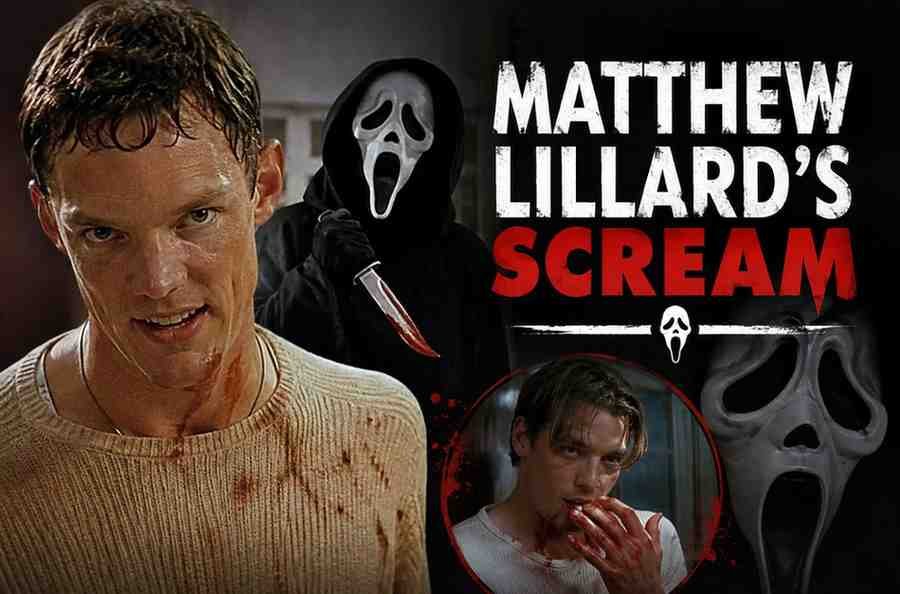
He was the goofy, lanky video store clerk who threw one hell of a house party. Nobody expected him to be a ghost-faced killer drenched in blood, gleefully admitting his motive was “peer pressure.” Matthew Lillard’s portrayal of Stu Macher in the original 1996 Scream didn’t just steal scenes; it fundamentally altered the DNA of horror villains. Matthew Lillard’s Scream Decades later, his chaotic energy remains the gold standard, a performance so uniquely terrifying and hilarious that its recent echo in the 2022 requel sent shockwaves through the fanbase. This deep dive unpacks every facet of Lillard’s involvement, from the improvisational genius on set to the voice cameo that proved you can’t keep a good psychopath down.
The Birth of a Horror Icon: Casting Matthew Lillard in Scream
Finding the right balance for Billy Loomis’s accomplice was a tricky puzzle for director Wes Craven. The script demanded someone who could be the comic relief, the party animal, and a sadistic murderer all at once. Matthew Lillard, fresh off the quirky drama Hackers, walked into the audition with a live-wire energy that no one else possessed. Casting directors initially saw dozens of young actors for the role, but Lillard’s unhinged, improvised read—where he physically threw himself around the room—immediately set him apart from the polished competition. Craven saw a fearless performer unafraid to look ridiculous and menacing within the same breath, a combination that became the secret weapon of the entire third act.
Anatomy of a Villain: What Made Stu Macher Truly Terrifying
Stu Macher worked so well because he weaponized the “funny best friend” trope. Unlike the calculated, smoldering anger of Skeet Ulrich’s Billy Loomis, Stu operated on pure, impulsive sadism. He wasn’t avenging a broken family; he was doing it for kicks. This psychological profile revealed a realistic, chilling type of peer-dependent evil. The horror of Stu lies in his banality—a bored suburban kid who treats disembowelment like a homework assignment. Lillard played him with a frat-boy physicality, sticking his tongue out and dancing before stabbing, which stripped away the gothic mystique of traditional slashers and replaced it with something far more recognizable: a remorseless thrill-seeker standing right next to you in class.
The Kitchen Scene: Improv and a Cordless Phone to the Head
The final bloodbath in the Macher house kitchen is a masterclass in chaotic acting. Lillard’s performance reaches a fever pitch here, largely due to his commitment to improvisation. He improvised the moment where Stu licks the fake blood dripping down his hand, a grotesque and childlike gesture that became one of the film’s most memorable shots. His wild line delivery—shouting “I’m feeling a little woozy here!”—perfectly captured a maniac crashing from an adrenaline high. The physical violence was equally real; Lillard encouraged Ulrich to actually hit him with the phone receiver during their fight. The unscripted thuds and genuine yelps of pain added a raw, visceral texture that a choreographed fake fight could never replicate, cementing this showdown as a horror masterpiece.
“My Mom and Dad Are Gonna Be So Mad at Me!”
This single line of dialogue shattered the rules of the genre. As Stu bleeds out, realizing the gravity of his actions, his primary concern isn’t eternal damnation—it’s parental disappointment. Lillard delivered the death monologue with a tearful, whimpering child’s voice, switching instantly from a slasher to a terrified boy. It’s a moment of dark, brilliant absurdity that writer Kevin Williamson and Lillard mined for maximum psychological impact. The line exposes Stu’s ultimate tragedy: he was an emotionally stunted follower playing dress-up in a killer’s robe. The delivery felt so spontaneous and pathetic that audiences almost felt a twinge of sympathy for the dying psycho, a testament to the authenticity Lillard brought to the role.
The Weight of the TV: Did Stu Macher Really Die?
Horror fans have debated Stu Macher’s fate for over two decades. The scene shows Billy and Stu repeatedly stabbing each other to fake injuries, followed by Sidney dropping a heavy CRT television on Stu’s head, seemingly electrocuting him. However, the original script and early sequel concepts by Kevin Williamson planned for Stu to survive. He was meant to return from prison orchestrating a new killing spree in Scream 3. While the production ultimately scrapped this, the canon never explicitly confirmed his death beyond the “presumed dead” logic. Lillard himself has playfully fanned the flames of this theory in interviews, noting that a TV to the head isn’t always fatal in a genre known for supernatural resurrections. The ambiguity keeps Stu’s potential return a tantalizing possibility for hardcore fans.
A Ghostly Echo: Matthew Lillard’s Secret Return in Scream (2022)
When Radio Silence’s requel hit theaters in 2022, long-time fans experienced a jolt of electricity during the finale. While Matthew Lillard didn’t physically appear, his presence loomed large. Amber Freeman, one of the new Ghostface killers, lives in Stu Macher’s old house, a shrine to the original massacre. As she throws a massive party mimicking the original finale, the filmmakers needed a nod to the past that wasn’t just visual. They approached Lillard to record a vocal cameo as the ghostly voice of Stu, whispering “For Wes” during a moment of chaotic energy. This served as a meta-tribute to the late director and a canonical whisper suggesting that Stu’s demented spirit—literal or figurative—still haunts the halls, proving Lillard’s intangible importance to the franchise’s lifeblood.
The “Flame On” Flub: A Happy Accident
In a film bursting with sharp dialogue, one of Stu’s most quoted lines is technically an error. During the kitchen reveal, while mocking Randy’s love for horror movies, Stu sarcastically mimics the Human Torch, shouting “Flame on!” Skeet Ulrich quietly mutters, “That’s not the movie, Stu.” This wasn’t a scripted correction but a genuine ad-lib between the two actors. Lillard had mixed up his comic book references, mistakenly calling back to a different character, and Ulrich stayed in character to call him out. Wes Craven loved the organic texture it added, so he kept it in the final cut. The moment brilliantly highlights Stu’s identity as a poser—a wannabe who didn’t actually know his horror or comic trivia as well as he pretended.
Shifting a Genre: How Lillard’s Performance Changed the Slasher Blueprint
Post-Scream, the landscape of horror villains underwent a distinct shift. Gone was the silent, lumbering masked man replaced by a wave of quippy, self-aware killers trying to replicate the Macher energy. Films like Urban Legend and Valentine sought actors who could mimic that pivot from charming to psychotic on a dime. Lillard proved that a villain could be a total goofball and still be terrifying, breaking the mold of the stoic, mysterious antagonist. The performance directly influenced the casting of character actors in horror for the next decade, prioritizing dramatic flexibility over traditional leading-man looks. The “Matthew Lillard Scream” effect taught a generation of filmmakers that unpredictability is far scarier than silence, fundamentally reshaping the marketability of a horror movie bad guy.
Why the Stu Macher Character Still Dominates Social Media
Decades after the film’s release, Stu Macher remains a meme-generating machine. Platforms like TikTok and Reddit endlessly circulate clips of his goofy dancing and unhinged screaming, repurposed for modern comedic and reactionary content. Gen Z, discovering the film through streaming, gravitates toward Stu’s chaotic energy because it feels distinct from the more brooding, “elevated” horror villains of today. His quotable one-liners and expressive face are perfectly suited for the short-form video era. This digital immortality introduces the “Matthew Lillard Scream” synergy to new audiences constantly, ensuring the 1996 performance continues to trend alongside current horror releases. His fan edits routinely go viral, proving that authentic, risk-taking acting never goes out of style.
The Actor’s Perspective: Lillard on His Career-Defining Role
Unlike some actors who run from their genre roots, Matthew Lillard embraces the Ghostface legacy with open arms and an infectious gratitude. In numerous convention appearances and interviews, he speaks of the role not as a stepping stone but as the moment he truly learned how to act without fear. He credits Wes Craven for creating a set where failure was allowed, enabling his wildest creative swings to make the final cut. Lillard openly weeps when discussing the fan connection, deeply moved that a blood-soaked psychopath could bring so many people joy. His perspective provides a masterclass in artistic integrity—proving that a “silly slasher flick” can hold immense emotional weight and craftsmanship when the actor behind the mask commits fully to the manic reality of the character.
Revisiting the Macher House: A Production Design Goldmine
The third act’s setting isn’t just a backdrop; it is a character in Stu’s psychological breakdown. Production designer Bruce Alan Miller designed the Macher house with a sterile, almost museum-like quality upstairs, contrasting with the chaotic, cluttered garage and kitchen. This visual split represents Stu’s fractured personality—the public face of suburban normalcy hiding a violent, messy interior. The glass doors, the island kitchen bar, and the narrow back hallways were built specifically to facilitate Lillard’s physical performance, giving him obstacles to trip over, lean on, and smear with blood. The architecture trapped the characters and the audience in a labyrinth of terror, providing the perfect playground for a stunt-heavy, physically draining showdown that relied heavily on the environment to amplify Lillard’s towering, demented energy.
Topical Map: Expanding the Matthew Lillard Scream Universe
| Core Entity | Sub-Topics & Connections |
| The Actor | Matthew Lillard biography, Hackers, Scooby-Doo, Five Nights at Freddy’s, acting range transition from indie to blockbuster. |
| The Character | Stu Macher psychological profile, peer pressure as motive, the “follower” dynamic, costume design (the robe swap). |
| Production | Wes Craven’s direction, Kevin Williamson’s script changes, practical blood effects, stunt coordination for the finale. |
| Cultural Impact | Self-referential horror, slasher revival of the 90s, the “Stu is alive” theory, Halloween costume popularity, fan fiction. |
| Franchise Future | Scream 7 speculation, deepfake potential, de-aging technology for prequels, legacy character returns. |
Frequently Asked Questions
Q: What is Matthew Lillard’s most famous scene in Scream?
A: His unhinged performance in the kitchen finale is his most famous scene. Lillard’s improvised tongue-licking of fake blood and the chaotic, screaming delivery of “I’m feeling a little woozy here!” turned the sequence into an iconic horror moment that showcases his raw, unpredictable energy.
Q: Did Matthew Lillard return for the new Scream movies?
A: Yes, he made a vocal cameo. In the 2022 Scream film, Lillard provided ghostly voice whispers as Stu Macher, specifically a tribute line saying “For Wes.” This was an audio Easter egg connecting the legacy character to the new generation of killers residing in the Macher family home.
Q: Is Stu Macher secretly still alive in the Scream universe?
A: The original plan by writer Kevin Williamson was for Stu Macher to survive the television incident and lead a prison-based cult in Scream 3. However, that script was scrapped, leaving his death canonically ambiguous. Matthew Lillard himself has joked about the character’s potential survival, keeping fan theories alive.
Q: How did Matthew Lillard land the role of Stu Macher?
A: He won the role through a wildly physical audition. Accompanying Skeet Ulrich as a reading partner, Lillard threw himself around the room with an insane level of energy that no other actor brought. Director Wes Craven was immediately drawn to his lack of inhibition and willingness to look completely manic.
Q: Was the “Flame on!” line a mistake by Matthew Lillard?
A: Yes, it was an actual flub. Lillard mistakenly referenced the Human Torch’s catchphrase from Fantastic Four while mocking the film Silence of the Lambs. Skeet Ulrich ad-libbed the correction in character, and the director loved the authentic bickering dynamic so much that he kept the error in the final film.
Q: How did Matthew Lillard feel about playing a horror villain in Scream?
A: He views it as the most significant creative breakthrough of his early career. Lillard has expressed immense gratitude for the role, often becoming emotional about the fan connection. He credits Wes Craven for the freedom to experiment and fail, which gave him the confidence to commit fully to the role’s physical and emotional extremes.