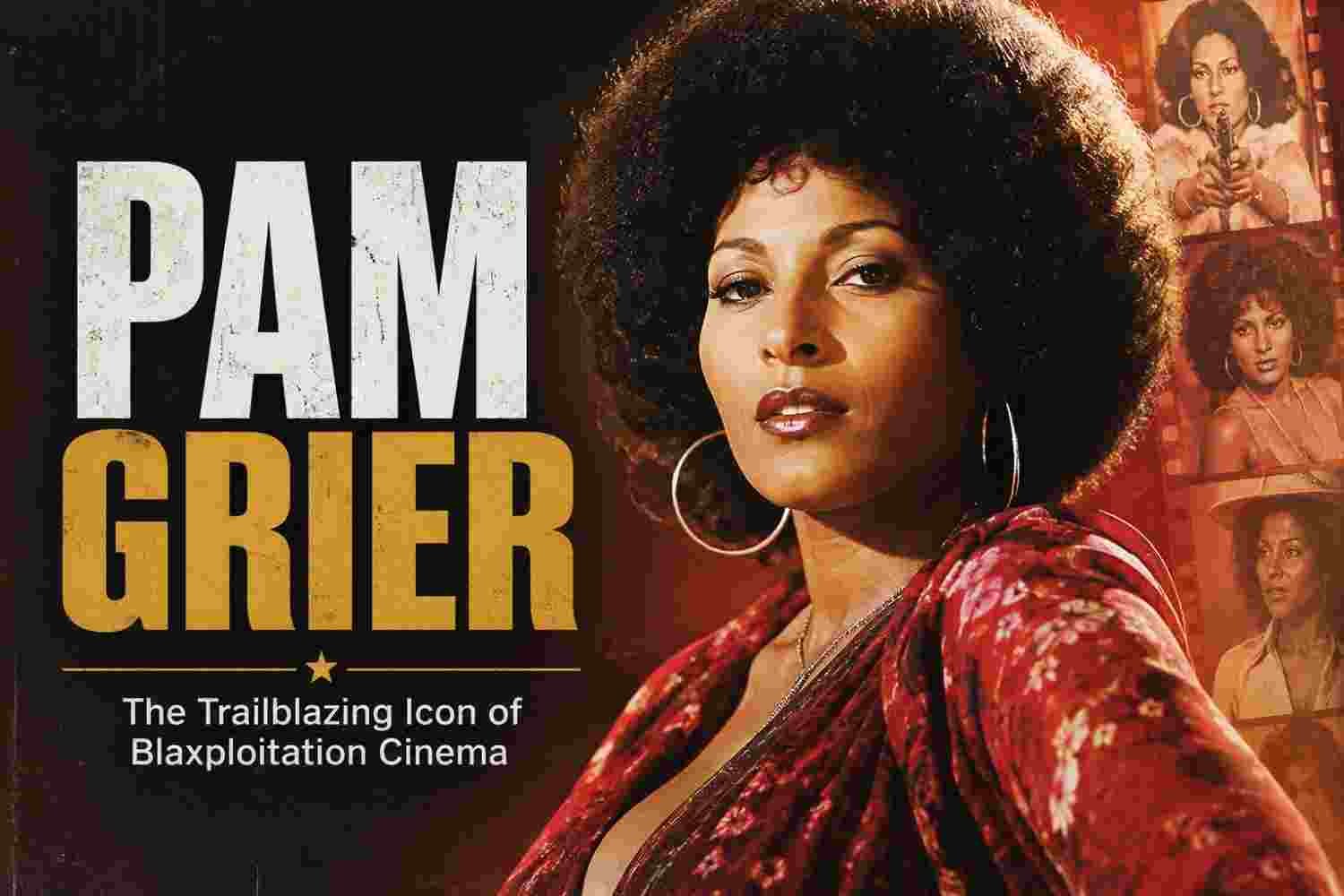
Introduction
You think you know action heroes. You have seen the capes, the car chases, and the explosions. Now, meet the woman who started it all. Pam Grier didn’t just enter Hollywood; she took it by storm. She wasn’t a damsel in distress. She was the one you called for help. Her story is one of survival, strength, and a beauty that changed the screen forever.
Early Life: The Foundation of a Fighter {#early-life}
Pamela Suzette Grier was born on May 26, 1949, in Winston-Salem, North Carolina. Her life was never easy, but the hard times built her character. Her father, Clarence, was an Air Force mechanic. Her mother, Gwendolyn, was a homemaker and nurse. The family moved often, eventually settling in Denver, Colorado.
Life in Denver wasn’t always peaceful. Grier faced hardship. She experienced a traumatic event as a young woman. She refused to be a victim. Instead, she channeled her pain into power. She learned self-defense. She built a physical and mental strength that would later become her trademark on screen.
This foundation was crucial. It gave her a sense of purpose. She entered beauty contests to earn money for college. Her striking looks and confident presence caught the eye of an agent. This was the first step on a path she never expected.
The Breakthrough: From Denver to Hollywood {#breakthrough}
The move to Los Angeles was a leap of faith. Grier’s agent, David Baumgarten, saw a unique star quality in her. She wasn’t just a pretty face; she had a fire in her eyes. This fire set her apart from other aspiring actresses.
Her first roles were small. She appeared in films like Beyond the Valley of the Dolls (1970) and The Big Doll House (1971). These were exploitation films, low-budget movies designed to shock and titillate. But Grier brought something more. She brought a real presence.
It was at American International Pictures (AIP) where she found her footing. She worked with director Jack Hill. He saw her potential. He knew she could be more than just another face in the crowd. He saw a leader. This partnership would change both of their lives.
The Blaxploitation Era: A Star is Forged {#blaxploitation}
The early 1970s saw the rise of a new genre: Blaxploitation. These films featured Black casts and were made primarily for Black audiences. They were often low-budget and action-packed. For the first time, Black actors could be heroes. They could be the protagonists of their own stories.
Pam Grier became the undisputed queen of this era. But she was different. She wasn’t a victim of circumstance. She was a force of nature. Her characters were strong, independent, and always in control. She brought a new kind of hero to the screen.
Her partnership with Jack Hill was the key. They made a series of films that defined the genre. Films like The Big Bird Cage (1972) and Black Mama, White Mama (1973) established her as a star. But her biggest hits were yet to come.
Defining Roles: Coffy and Foxy Brown {#defining-roles}
If you want to understand the power of Pam Grier, you must watch two films: Coffy (1973) and Foxy Brown (1974).
Coffy was a revelation. Grier played a nurse who seeks revenge on the drug dealers who ruined her sister’s life. The tagline said it all: “She’s the baddest one-chick hit-squad that ever hit town!” The film was a massive commercial success.
In Coffy, Grier wasn’t just an action star. She was a symbol of justice. She fought against a corrupt system that ignored the suffering of her community. Her performance was raw, powerful, and deeply human. She used disguises, wits, and her fists to get the job done.
Foxy Brown followed a year later. This time, Grier played a woman seeking revenge for her murdered boyfriend. She goes undercover as a prostitute to take down a crime ring. The film is pure, unadulterated 70s style.
Foxy Brown is iconic. Her afro, her outfits, her attitude. She was unapologetically Black and beautiful. She took on everyone who crossed her. These two films cemented Pam Grier’s status as a legend. They were more than movies; they were cultural events.
The Cultural Impact of Pam Grier {#cultural-impact}
The impact of Pam Grier cannot be overstated. In a time when Black women were rarely seen as leads, she was the leading lady. She was strong, sexy, and smart. She didn’t need a man to save her. She saved herself.
- Representation: She showed young Black girls they could be heroes. They could be the center of the story. This was a radical idea in the 1970s.
- Female Empowerment: Grier’s characters were feminists before it was a mainstream idea in Hollywood. They fought for themselves and their communities. They took on corrupt politicians and drug lords.
- Action Genre: She created the blueprint for the female action hero. Characters like Sarah Connor, Ellen Ripley, and even Lara Croft owe a debt to Grier. She proved that women could lead an action film.
Her influence went beyond movies. She was a style icon. Her afro was a statement of Black pride. Her wardrobe was bold and daring. She represented a new kind of Black womanhood—one that was confident and in charge.
Beyond the 70s: The Quiet Years and Reinvention {#beyond-70s}
As the Blaxploitation era faded, so did the constant film offers. The 1980s and early 1990s were a quiet period for Grier. She never stopped working. She appeared in smaller films and television shows. She continued to hone her craft.
This period tested her resilience. It was a chance to reflect and grow. She worked on stage. She took on character roles that challenged her. She never saw this as a setback. She saw it as a period of growth. She knew her best work was still ahead of her.
During this time, a new generation of filmmakers was growing up. They had watched her films. They understood her power. One of them was Quentin Tarantino.
The Tarantino Renaissance: Jackie Brown {#renaissance}
In 1997, Quentin Tarantino did something extraordinary. He wrote a film specifically for Pam Grier. Jackie Brown was based on the Elmore Leonard novel Rum Punch. It was a love letter to the actress and the era she defined.
Tarantino cast Grier in the title role. She played a flight attendant who smuggles money for a gun runner. When she gets caught, she must play both sides to survive. It was a mature, nuanced role. It showed a different side of the actress.
Jackie Brown was a critical success. It reminded Hollywood of her immense talent. It wasn’t just a comeback; it was a reintroduction. Tarantino famously said, “Pam Grier is the greatest actress who ever lived.” The role earned her a Golden Globe nomination. It proved that her star power was undeniable.
Pam Grier’s Style: Defining 70s Fashion {#style}
Pam Grier’s influence on fashion is still felt today. Her look was a blend of power and glamour. She made the afro a symbol of beauty. Her clothes were form-fitting and bold. She wore wide-brimmed hats, high-waisted pants, and long coats.
- The Afro: It was more than a hairstyle. It was a political statement. It declared pride in natural Black beauty.
- The Wardrobe: In films like Foxy Brown, her outfits were unforgettable. They were edgy, modern, and powerful. They showed a woman who was in control of her image.
- The Attitude: The most important accessory was her confidence. She walked into a room like she owned it. This attitude made the clothes come alive.
Today, designers still cite her as an inspiration. Her 70s aesthetic is timeless. It represents a moment when fashion and politics intertwined. She showed that being strong could be beautiful.
Television and Modern Roles: A Living Legend {#television}
The new millennium brought new opportunities. Grier became a familiar face on television. She had a recurring role on the hit Showtime series The L Word. She played Kit Porter, a wise and supportive sister. The role introduced her to a new, younger audience.
She continued to work in film. She appeared in Bones, The Man with the Iron Fists, and Poms. Each role shows her versatility. She can be tough, funny, and deeply emotional. She never phones in a performance.
Her voice has also become iconic. She has narrated documentaries and lent her voice to animated series. Her presence is always a sign of quality. She is a respected elder stateswoman of the industry. She continues to choose projects that excite her.
Awards, Honors, and Recognition {#awards}
While Pam Grier may not have a wall full of Oscars, her contributions have been recognized in meaningful ways.
- Career Achievements: She has received lifetime achievement awards from numerous film festivals. These awards acknowledge her impact on cinema and culture.
- Pioneering Spirit: She was the first African American female to grace the cover of Ms. Magazine. This was a major milestone for representation.
- Golden Globe Nomination: Her nomination for Jackie Brown was a professional validation of her dramatic skills.
More than awards, her legacy is her influence. She is cited as an inspiration by countless actresses and filmmakers. Her name is synonymous with strength and grace. Her story is taught in film schools. This is a recognition that no trophy can match.
Personal Life and Activism {#personal-life}
Pam Grier has lived a full and fascinating life off-screen as well. She has been romantically linked to several high-profile figures, including comedians Freddie Prinze and Richard Pryor. She has never married, focusing instead on her career and personal growth.
- Health Battles: In 1988, Grier was diagnosed with cancer. She was given a short time to live. She refused to accept the prognosis. She explored alternative medicine and holistic healing. She survived and thrived. This experience deepened her commitment to health and wellness.
- Activism: Grier has been a long-time advocate for animal rights. She has worked with organizations like PETA. She has also spoken out on issues of social justice and equality. Her activism is an extension of the strong women she played on screen.
- Author: In 2010, she released her memoir, Foxy: My Life in Three Acts. The book is candid and inspiring. It details her struggles and triumphs. It cemented her status as a survivor in every sense of the word.
The Enduring Legacy of a Screen Icon {#legacy}
What is the true legacy of Pam Grier? It is the image of a woman who refused to be limited. She took a genre that could have been exploitative and turned it into a platform for empowerment. She showed the world a new kind of hero.
She proved that an actress could be both tough and vulnerable. She could be sexy and intelligent. She could be a sex symbol and a role model. Her characters were not defined by their relationships with men. They were defined by their own actions and beliefs.
Pam Grier is a true original. Her journey from Denver to Hollywood icon is a testament to her talent and resilience. She didn’t just play strong women; she became one. Her influence on action cinema, Black culture, and fashion is permanent. She is, and will always remain, the baddest one-chick hit-squad that ever hit town. Her work stands as a powerful reminder of what is possible when talent meets determination.
Frequently Asked Questions {#faq}
Q: What is Pam Grier’s most famous role?
A: While she is known for many roles, her work as the title character in Foxy Brown and Coffy are her most famous. Later, her lead role in Quentin Tarantino’s Jackie Brown introduced her to a new generation.
Q: How did Pam Grier change the action genre?
A: She created the template for the modern female action hero. She was one of the first women to lead action films, portraying characters who were strong, independent, and physically capable without sacrificing their femininity. She opened doors for all who followed.
Q: Was Pam Grier the first female action star?
A: While there were earlier actresses in action-oriented roles, Pam Grier is widely considered the first major female action star. She was the first woman whose name and image alone could carry an action film to box office success.
Q: What did Quentin Tarantino say about Pam Grier?
A: Quentin Tarantino has consistently praised Pam Grier, famously calling her “the greatest actress who ever lived.” He wrote the film Jackie Brown specifically for her, calling the opportunity to work with her a dream come true.
Q: Is Pam Grier’s story based on a true story?
A: This is a common misconception. The films Coffy and Foxy Brown are fictional stories. However, her autobiography, Foxy: My Life in Three Acts, is her true story. It details her real-life struggles and triumphs, which are as dramatic as her films.
Q: How does Pam Grier influence fashion today?
A: Her 1970s style is a constant source of inspiration for designers. The afro, the form-fitting silhouettes, and the bold accessories she wore have made a major comeback. Her look represents a powerful blend of glamour and political statement that remains relevant.
Conclusion
Pam Grier’s story is more than a Hollywood tale. It is a story about the power of self-belief. It is about turning pain into strength and challenging every expectation. She didn’t wait for permission to be a star. She simply became one.
Her films are a document of a cultural shift. Her characters are timeless. They are the ancestors of every strong woman on screen today. The next time you see a female hero take charge, you are seeing the influence of Pam Grier.
Now, it’s your turn. Watch a Pam Grier film this weekend. See the original queen in action. Share your favorite moment on social media and keep her legendary story alive.