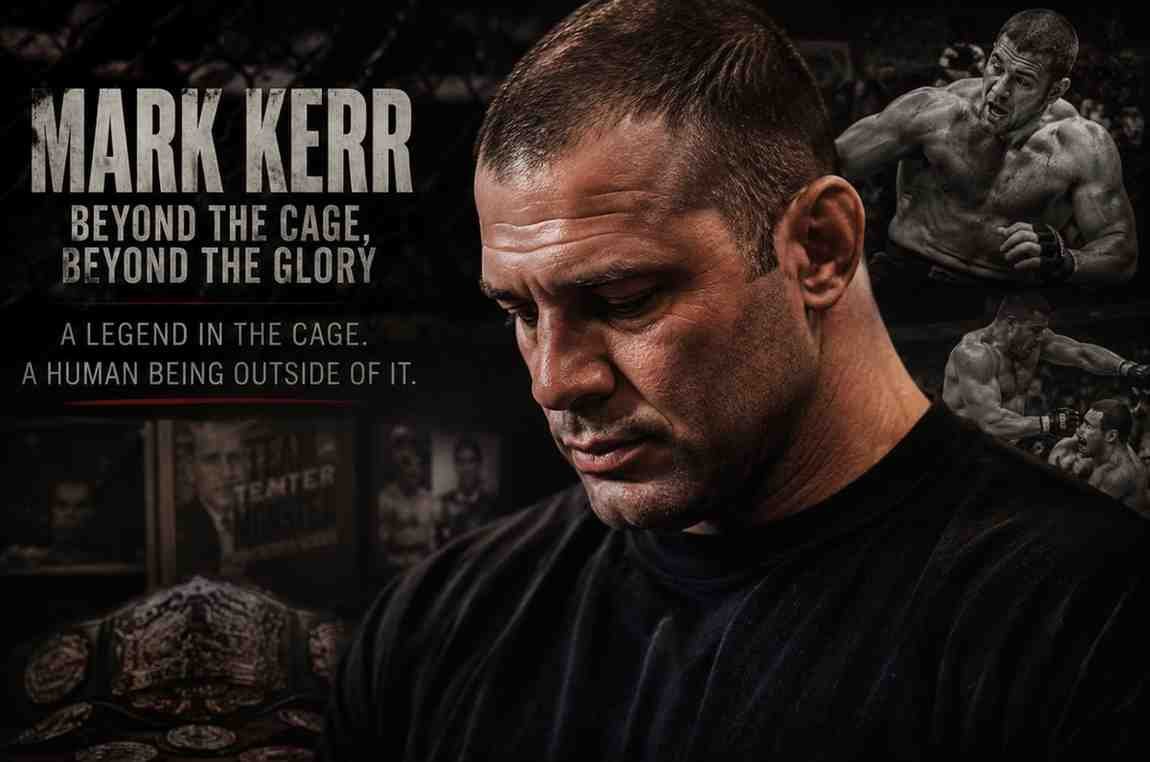
Mark Kerr didn’t just win fights; he shattered the limits of what a heavyweight could be. Before the sport had a rulebook for monsters, he was a two-time UFC tournament champion and a Vale Tudo wrecking ball. His story is not a polished highlight reel. It is a visceral, heartbreaking, and ultimately human journey of raw power colliding with profound vulnerability. This article maps every facet of the man known as “The Smashing Machine.”
The Definitive Timeline of Mark Kerr’s Fighting Career
Understanding Mark Kerr requires tracing his path from wrestling mats to no-holds-barred cage fighting. This table breaks down the pivotal moments that defined his chaotic legacy.
| Event / Phase | Year(s) | Significance in Mark Kerr’s Story |
| NCAA Division I Wrestling | 1992 | Won the national championship for Syracuse, establishing his elite grappling base. |
| UFC 14 & 15 Tournaments | 1997 | Dominated two single-night tournaments, becoming the heavyweight king overnight. |
| Pride FC Debut | 1998 | Transitioned to Japan, facing dangerous Brazilian grapplers in longer, more brutal matches. |
| The “Smashing Machine” Documentary | 2002 | HBO cameras exposed his addiction struggles, forever linking athletic glory with human fragility. |
| Post-Pride Underground Fights | 2004-2008 | Fought sporadically, battling severe injuries, personal loss, and a deepening painkiller dependency. |
| Recovery & Advocacy | 2010s-Present | Became a voice for fighter safety and recovery, turning his personal wreckage into a cautionary tale. |
How Syracuse Forged a Future Champion
Mark Kerr didn’t stumble into combat sports. He crafted a foundation of granite at Syracuse University. As a Division I wrestler, Kerr won the 1992 NCAA championship at 190 pounds. His coach, Ed Carlin, remembers a machine with a non-stop motor. That relentless takedown pressure didn’t just win matches; it terrified opponents. Kerr’s physical blueprint—a thick neck, crushing grip, and freakish balance—made him transition to fighting a natural evolution. The wrestling room taught him a dark art: how to break a man’s will through pure pressure long before a punch is ever thrown.
UFC Domination: Conquering the No-Holds-Barred Era
When Mark Kerr entered the Octagon in 1997, there were no weight classes for heavyweights. He faced giants and smashed them. At UFC 14, he needed less than two minutes to submit Moti Horenstein. Later that night, he knocked out Dan Bobish with a knee and punches. The victory earned him the tournament title. He returned at UFC 15 and did it again, defeating Greg Stott by knockout in just 17 seconds. Kerr’s style was terrifyingly simple: a double-leg takedown, brutal ground-and-pound, and a suffocating submission. He was not a technical striker; he was a physical force that nobody could stop.
The Pride Fighting Championships: An American Gladiator in Japan
Mark Kerr’s move to Pride FC made him a global superstar. The Japanese fans treated him like a mythological beast. However, the rules were different. Pride didn’t regulate performance-enhancing substances, creating a chemically enhanced arms race. Kerr fought Igor Vovchanchyn, Enson Inoue, and Kazuyuki Fujita in wars that punished the body. His bout against Vovchanchyn showed his vulnerability; the size and aggression that worked in the UFC now met equally jacked, skilled fighters willing to die in the ring. Kerr’s wins in Japan were dominant, but the losses began to chip away at his invincible aura and physical health.
The HBO Documentary That Changed Everything
In 2002, director John Hyams released The Smashing Machine: The Life and Times of Extreme Fighter Mark Kerr. The film did not glorify the violence. It exposed the needle. It showed Kerr injecting himself with painkillers before a fight, spiraling emotionally, and nearly dying from an overdose. This wasn’t a hype piece—it was a funeral march for the sport’s innocence. The documentary turned Mark Kerr into a tragic figure overnight. It became the most honest look at the psychological toll of fighting ever made. Even today, the film stands as the essential text on fighter vulnerability.
A Brutal Battle with Painkillers and Personal Demons
The injuries Mark Kerr sustained required heavy medication. What started as a treatment plan became a crippling addiction. His body was breaking down; broken hands, shattered ribs, and a spine that screamed with every movement. The narcotics numbed the physical agony but amplified a deep depression. Kerr’s addiction led to the collapse of his relationship with his girlfriend, Dawn. The story isn’t neat or redemptive at this stage—it is a warning. He overdosed, lost his fortune, and disappeared from the public eye, becoming a ghost haunting the sport he once ruled.
Dwayne “The Rock” Johnson Steps into the Cage
Hollywood came calling with a script that few could stomach. Dwayne Johnson, known for larger-than-life heroes, chose to play Mark Kerr. For Johnson, this role demands a shift from action star to dramatic actor. The A24 film The Smashing Machine, directed by Benny Safdie, began production focusing on Kerr’s peak and fall. Johnson completely transformed his physique and, by all accounts, captures the emotional weight Kerr carries. Having the biggest movie star on the planet play a troubled fighter validates the depth of Kerr’s story. It promises to bring a conversation about mental health in sports to a mainstream audience.
Wrestling with Addiction: A Road to Recovery
Mark Kerr’s path toward sobriety was not a straight line. It involved backslides, lost years, and deep isolation. He eventually returned to his wrestling roots to find structure. Kerr started coaching, realizing that teaching the next generation gave him purpose. He speaks now to fighters about the dangers of opioid use with an authority no doctor possesses. Kerr’s body still bears the scars—multiple joint replacements and nerve damage—but his mind cleared. His survival offers a blueprint for retired athletes struggling with chronic pain and identity loss.
What Really Happened in the Legendary Igor Vovchanchyn Fight?
The Pride FC clash against Igor Vovchanchyn remains Mark Kerr’s most analyzed fight. The Ukrainian striker possessed hands of concrete. Kerr dominated early, taking Igor down with ease. But something changed in the second round. The rule set in that event allowed knees on the ground, a technique illegal in the UFC. Igor’s knees brutalized Kerr’s face. Exhausted and unable to secure a submission, Kerr lost the decision. The fight proved that even superhuman conditioning has a breaking point when the rule set shifts against a wrestler.
Why Bas Rutten Remains the Ultimate Friend and Guide
No discussion of Mark Kerr is complete without Bas Rutten. The Dutchman was Kerr’s friend, cornerman, and sometimes his conscience. Bas saw the monster in the cage and the broken man backstage. Their friendship, heavily featured in the documentary, highlights a rare bond. Bas attempted interventions, talked Kerr through panic attacks, and held him accountable. Rutten often says that saving Kerr’s life is one of his proudest achievements—more than any championship he ever won. Their relationship is a masterclass in male vulnerability and loyalty.
The Coaching Philosophy: Passing on the Hard Lessons
Today, you’ll find Mark Kerr in a gym, not an arena. His coaching style is quiet, not theatrical. He emphasizes wrestling control and, crucially, injury prevention. Kerr tells his students, “You don’t want my career.” He teaches fighters to tap early, protect their joints, and avoid the “tough guy” mentality that put him in a wheelchair temporarily. His approach is a direct rebellion against the culture that nearly killed him. In a sport still plagued by weight-cutting and training injuries, Kerr’s voice offers a sane, experience-based alternative.
Understanding Vale Tudo: The Rule Set That Made a Monster
Brazilian Vale Tudo was where Mark Kerr became a legend. The Portuguese term means “anything goes.” For Kerr, this was a playground. With no gloves, headbutts allowed, and unlimited time limits, his wrestling became a superpower. He destroyed Brazilian jiu-jitsu specialists by simply refusing to engage in their guard game. He would slam, smash, and suffocate. The World Vale Tudo Championship tournaments showcased a Mark Kerr who existed purely on instinct and lactic acid tolerance. This era defined him as the ultimate bare-knuckle fighter.
The Physical Toll: Surgeries, Scars, and Survival
Mark Kerr’s medical chart reads like a trauma ward report. He has survived over a dozen major surgeries. Both knees are artificial. His back is fused. His hands show the knotty scars of broken knuckles healed without proper care. He paid for his glory with his body. The pain from these injuries directly fed the addiction narrative. Kerr’s current mobility struggle is a stark reminder of the cost hidden behind pay-per-view lights. He often walks with a limp, a living monument to the consequences of untreated injuries in prizefighting.
Where Does Mark Kerr Rank Among Heavyweight GOATs?
Ranking Mark Kerr purely on wins and losses misses the point. His prime lasted roughly five years, but during that window, he was unbeatable. Fans debate his place in history against Fedor Emelianenko and Antonio Rodrigo Nogueira. Kerr lacked the longevity of a Couture or the striking of a Cro Cop. However, his peak athletic dominance, the sheer visual of him destroying larger opponents, places him in a specific category: the most terrifying physical specimen to ever step on a mat. His legacy, filtered through the tragedy, makes him unique among the greats.
Learning From a Legend: Fighter Safety and Mental Health Advocacy
Mark Kerr transforms his regret into education. He advocates for a fighters’ union, fair pay, and long-term healthcare. When Kerr speaks about mental health, promoters listen because his story is their worst-case scenario. He openly discusses the depression that followed his fighting days. His talks emphasize that a fighter’s identity must exist beyond the cage. This pivot from fighter to advocate gives his suffering meaning and protects the current generation from repeating his darkest chapters.
Frequently Asked Questions
What is Mark Kerr known for?
Mark Kerr is a former UFC heavyweight tournament champion and a Vale Tudo legend. He gained wider fame from the HBO documentary The Smashing Machine, which detailed his dominance and struggles with addiction.
Where is Mark Kerr now?
Mark Kerr currently works as a coach and recovery advocate. He spends his time training younger fighters and speaking about the dangers of painkiller addiction in combat sports.
Is Dwayne Johnson playing Mark Kerr in a movie?
Yes, Dwayne “The Rock” Johnson is playing Mark Kerr in the A24 film The Smashing Machine. The movie focuses on Kerr’s fighting career and his personal battles with addiction.
How did Mark Kerr get the nickname “The Smashing Machine”?
The nickname referred to his crushing ground-and-pound style. Kerr would ground opponents with wrestling, then “smash” them relentlessly with punches and elbows, ending fights decisively.
What was the documentary The Smashing Machine about?
The HBO documentary followed Mark Kerr’s life during his peak in Pride FC. It focused heavily on his drug addiction, showing a raw, uncensored side of mixed martial arts.
Is Mark Kerr in the UFC Hall of Fame?
No, as of now, Mark Kerr has not been inducted into the UFC Hall of Fame. However, his tournament wins in the late 1990s and impact on the sport keep him in the conversation among pioneer-era fans.
Conclusion
Mark Kerr’s body counts the cost of every slam, every punch, and every pill. He does not ask for your pity; he commands your attention. The Smashing Machine story asks a hard question: was the glory worth the wreckage? Watch the old fights, study the documentary, and look at your own battles through the lens of his survival. Then, step into a gym, or simply reach out to a friend struggling alone. That is how you honor a titan who managed to walk through fire and survive.